





























Glass Furniture Made in Kenya from Recycled Glass
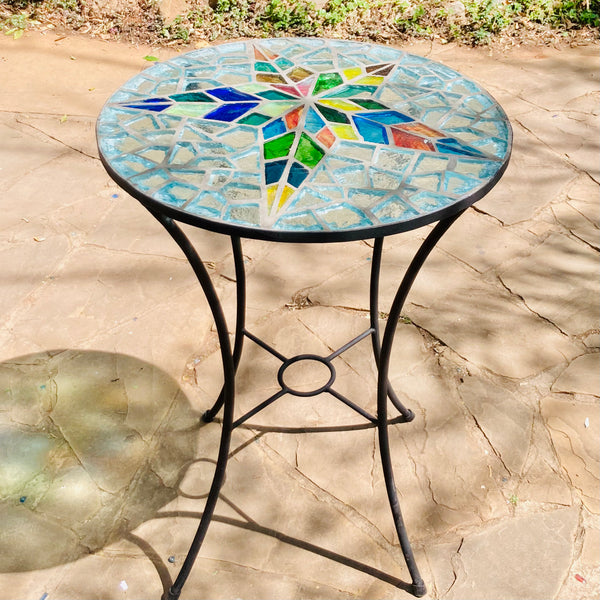
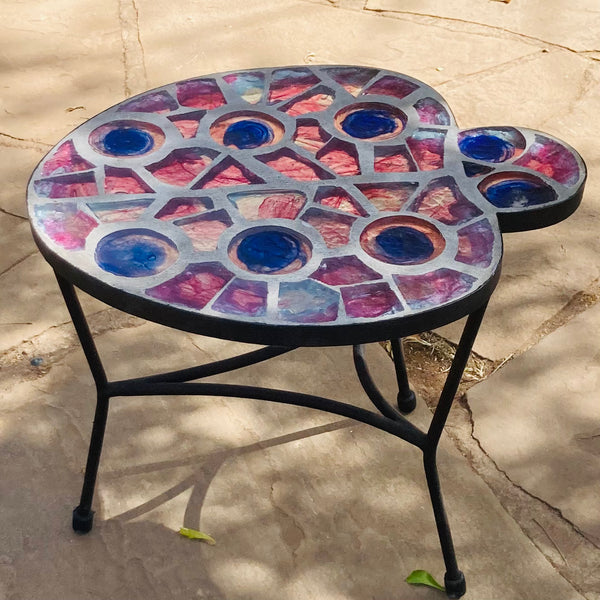
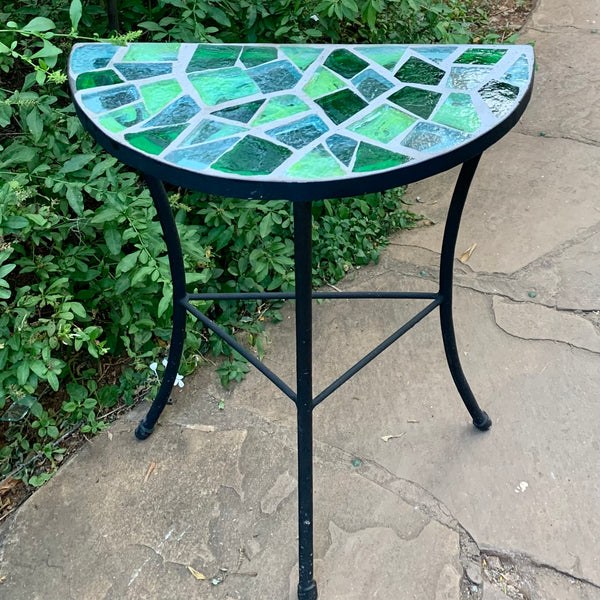
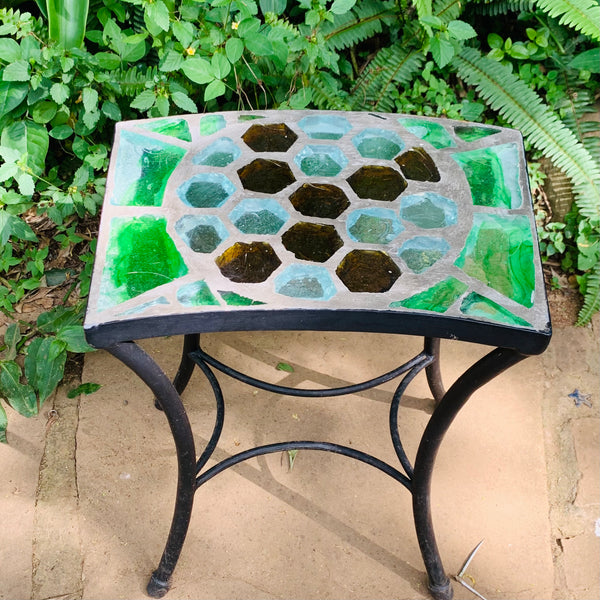
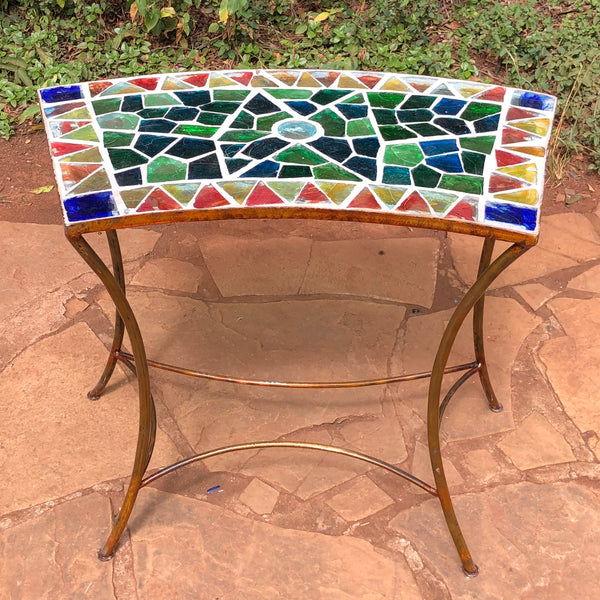
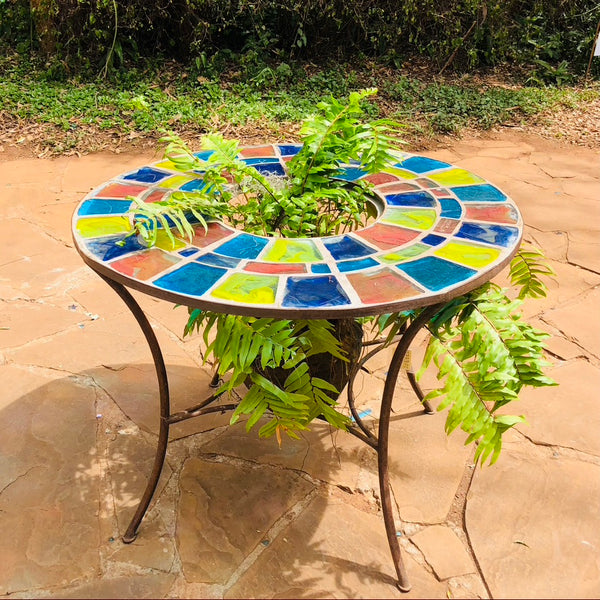
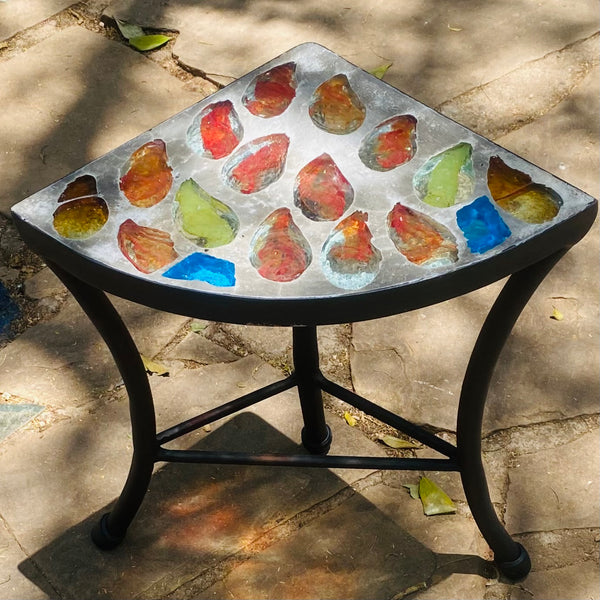
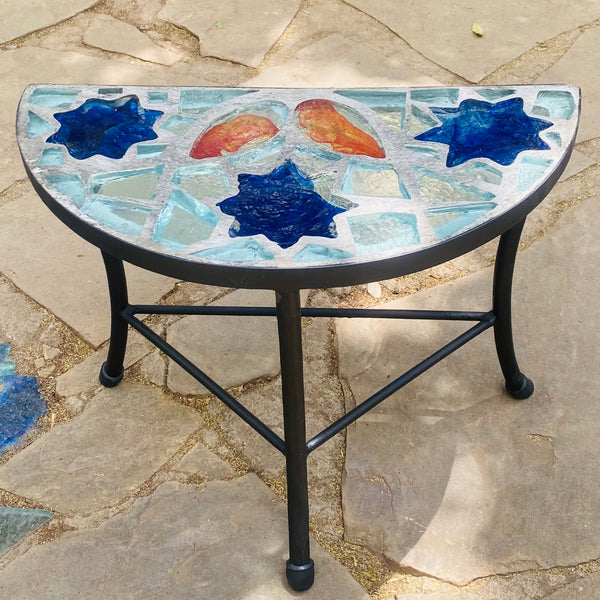
This is glass furniture built to last — tables, chairs, and stools made from hand-cast blocks of recycled glass set in a cement matrix and mounted on wrought iron frames. The technique is called dalle de verre: thick glass pieces, cut and arranged by hand, bonded into structural slabs that form the table tops and seat surfaces. These are not furniture pieces with glass accents. The glass is the structure.
The material is recycled waste glass — bottles, window offcuts, industrial scrap — processed at Kitengela Glass studios in Nairobi. The studio has been working with recycled glass since 19921. Every piece in this furniture collection is made individually. Lead times run 4 to 6 weeks because nothing here is pulled from a warehouse.
These pieces work indoors and outdoors. The glass handles weather without fading or degrading. The wrought iron frames are built for outdoor conditions. If you need a specific size or a different colour combination, custom glass furniture is available — contact the studio before ordering.
What's in This Collection
Three types of glass furniture, each built on the same dalle de verre method.
Glass Tables:
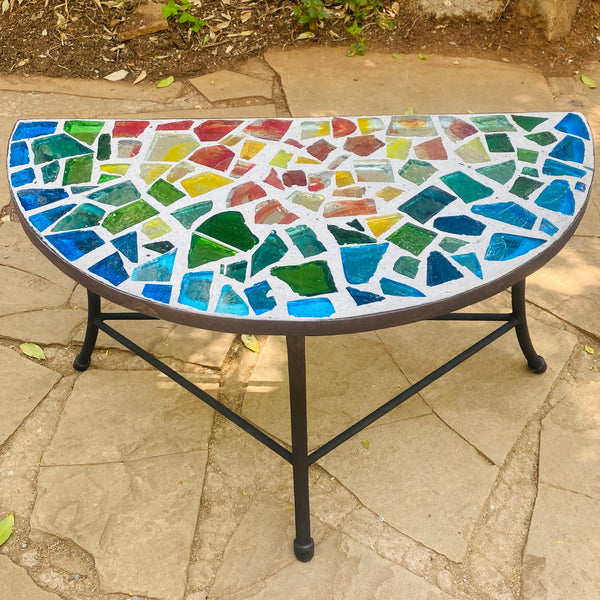
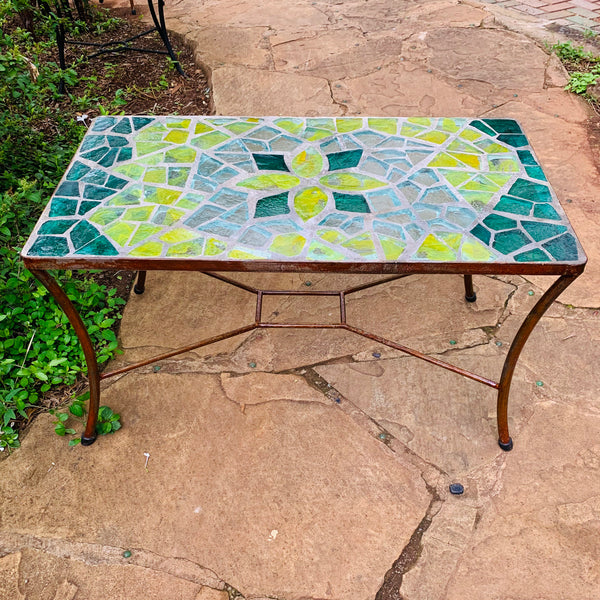
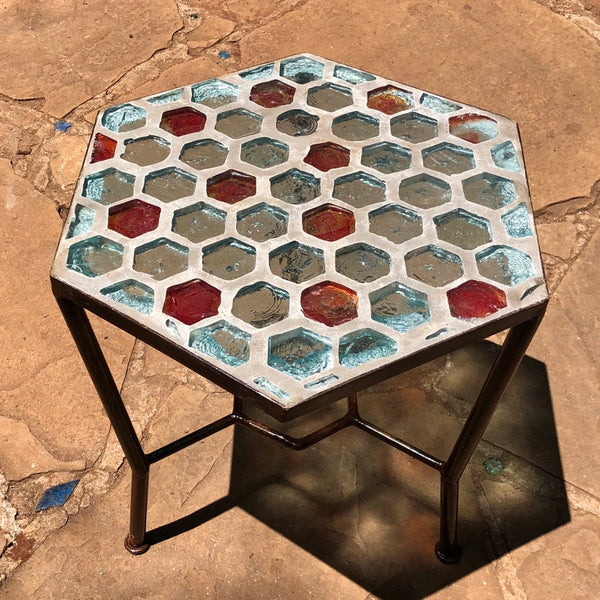
The recycled glass tables range from glass side tables and glass side coffee tables to full dining table sizes. All are built with dalle de verre tops — hand-arranged recycled glass blocks in a cement matrix — on wrought iron bases. The tops are structural and decorative. Custom sizes are available for non-standard dining or coffee table configurations.
Glass Chairs:
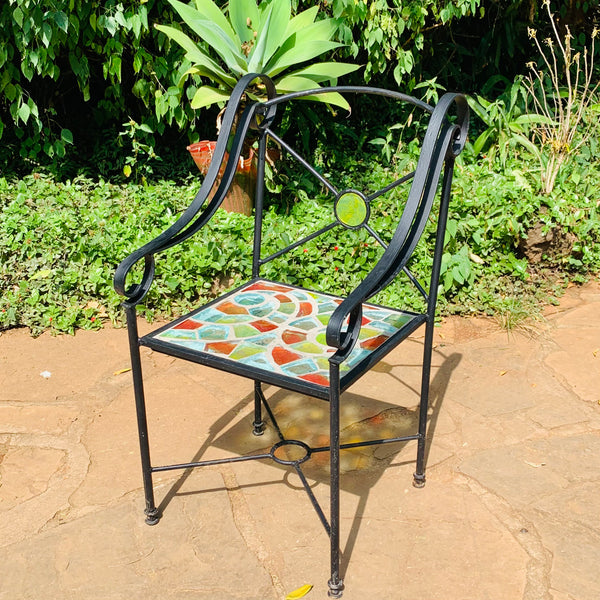
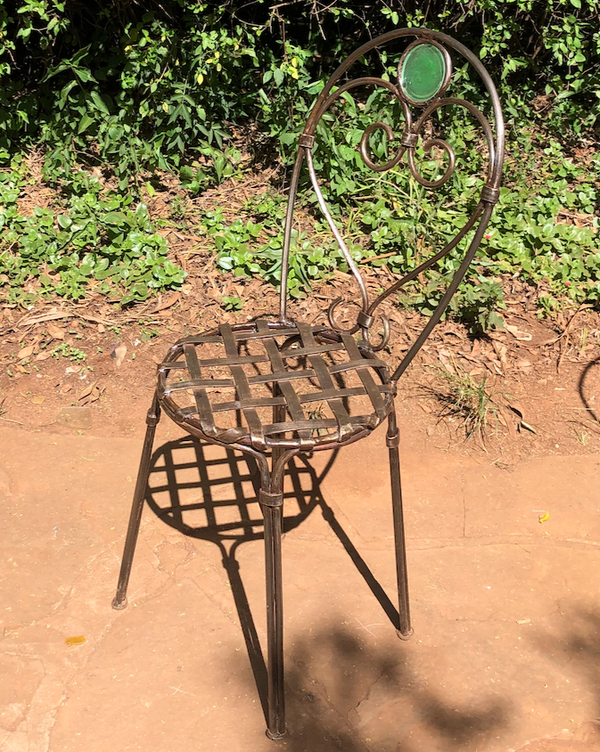
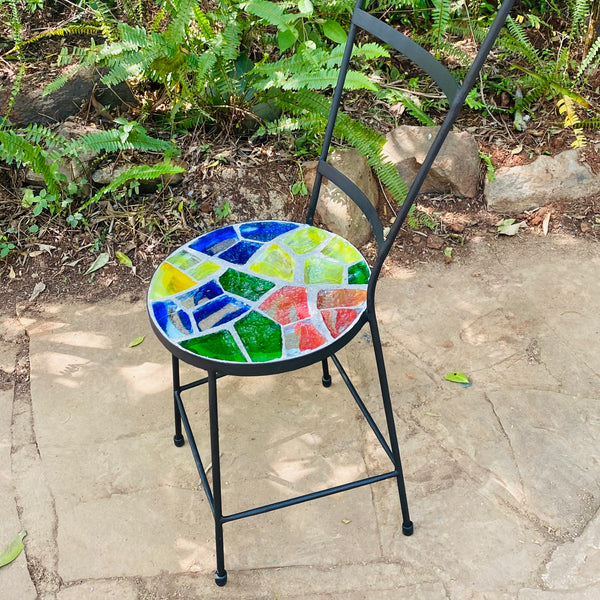
The handmade glass chairs use the same dalle de verre construction for the seat surface, with wrought iron frames. They are designed to work both as standalone chairs and as a matched set with the glass tables. Indoor and outdoor use. Weight and seat height are heavier thanthose of standard dining chairs.
Glass Stools:
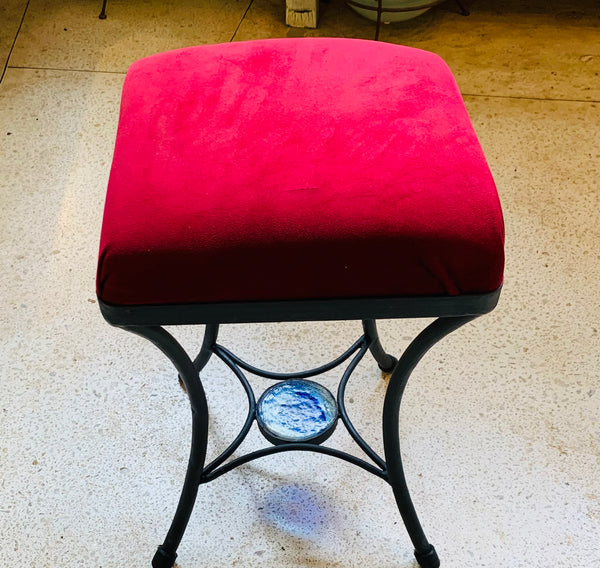
The dalle de verre stools are the most compact pieces in the range — they function as stools or as small side tables depending on placement. Recycled glass top, cement matrix, wrought iron base. Useful in a garden as a plant stand, indoors as a side table, or alongside the chairs as additional seating.
The Construction and the Material
Dalle de verre is a technique developed in mid-20th century France for making structural glass panels. It uses thick, faceted glass chunks — dailes, meaning slabs — arranged in a pattern and set in concrete or epoxy resin. Kitengela Glass uses recycled waste glass for the dalle pieces and a cement matrix to bond them. The result is a glass surface that is load-bearing, not just decorative.
The wrought iron frames are made at the same studio. Everything in a finished piece of Kitengela glass furniture is made on-site in Nairobi — the glass is processed there, the dalle pieces are cut and arranged there, the frames are forged there. There is no outsourced component.
On sustainability: the studio processes over 500 kilograms of recycled waste glass daily. Using recycled glass for furniture requires significantly less energy than producing new glass from raw materials. The glass itself is inert — it does not off-gas, degrade, or leach into soil, which matters for sustainable glass furniture used outdoors. A well-maintained Kitengela furniture piece does not have a planned replacement date.
Kitengela Hot Glass was founded in 1992 by Anselm Croze. The furniture collection reflects the same design approach as everything else at the studio: functional objects built from material that would otherwise be waste.